


Amasonic
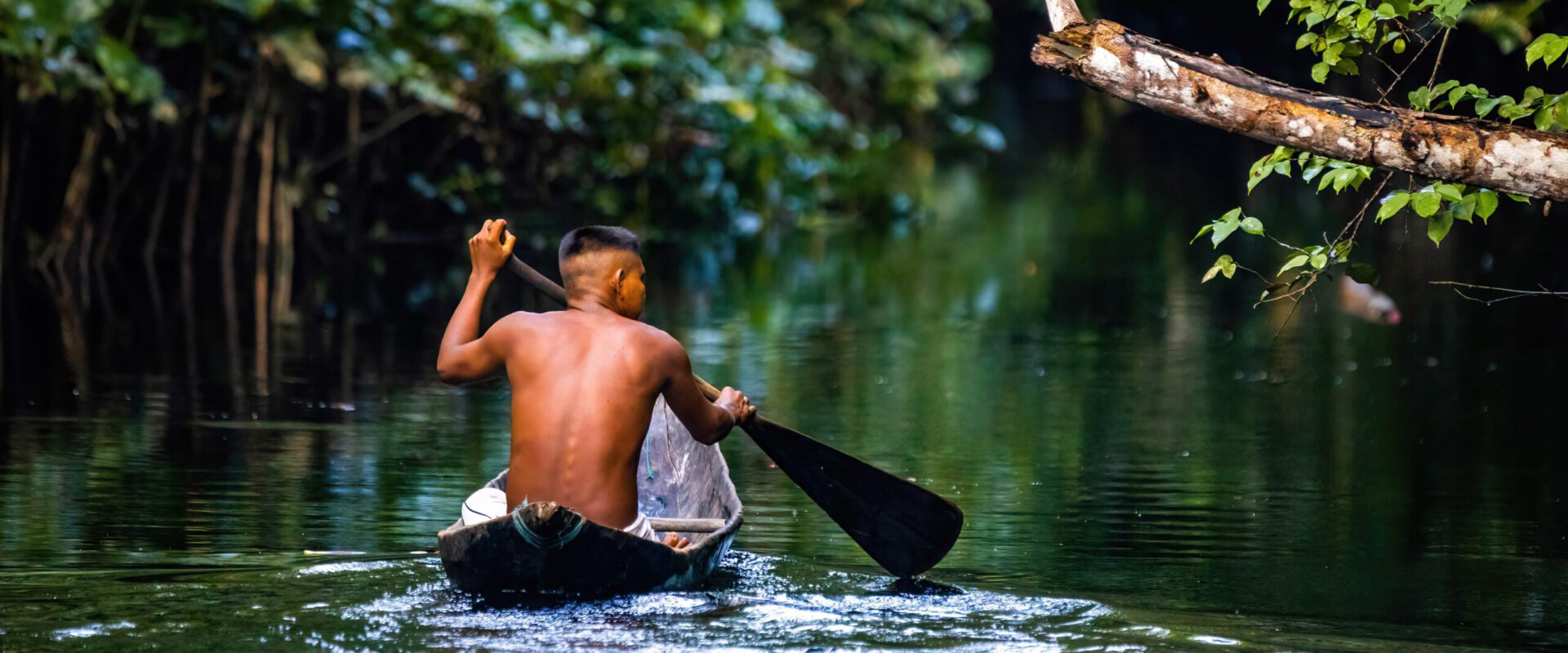
Amasonic is 15-30 min XR experience where the user can experience different human and non-human perspectives on the Amazon River gathered by local communities and scientists. While exploring the installation, users compose a sonification, translating their interaction and co-existence with the river echoing the multitude of life connected to the Amazon River.
Amasonic is both a scientific project with the aim to collect the many voices of humans and nonhumans connected to the river and an XR Art project functioning as local and remote access points to the river songs and gathered data and stories.
With Amasonic we create a community-based project where we Invite local communities and scientists to collect tales and data about the river and its inhabitants. Working together we create a living sound archive that will grow in a 5-year project span. The sound archive will be used to generate river songs. Sonifications of the river that may be accessed from different human and nonhuman perspectives. Creating a multilayered, dynamic, and ever-evolving sonification and physical experience of the Amazon River as a living entity. To access this growing, communal archive of river songs we will build an XR installation as an access hub, where the user can both compose with and access the sound archive by choosing a Human or Non-Human lifeform. You can listen to the river tales from an Amazon river dolphin perspective, as a water plant, as a fisherman or as an ancestor, or even from the perspective of the river waterbody itself.
By moving your body through the XR installation space a user will intuitively spawn voices of other lifeforms or entities into existence to create a highly personal journey through the data points and unique sound experience. Since the installation is multi-user and can accommodate 8 persons simultaneously, all interactions with the system will create a collective story, sonification, and river song that can be heard by the standing audience.
Production details:
Created by Maria Cecilia Oliveira & Marcel van Brakel
Country: The Netherlands, Germany and Brazil
Running time: 15-30 mins
Status: in development, expected release in 2026
A multi-perspective XR sonification of Amazon River tales
Amasonic was presented as part of the XR Market at New Images in Paris